
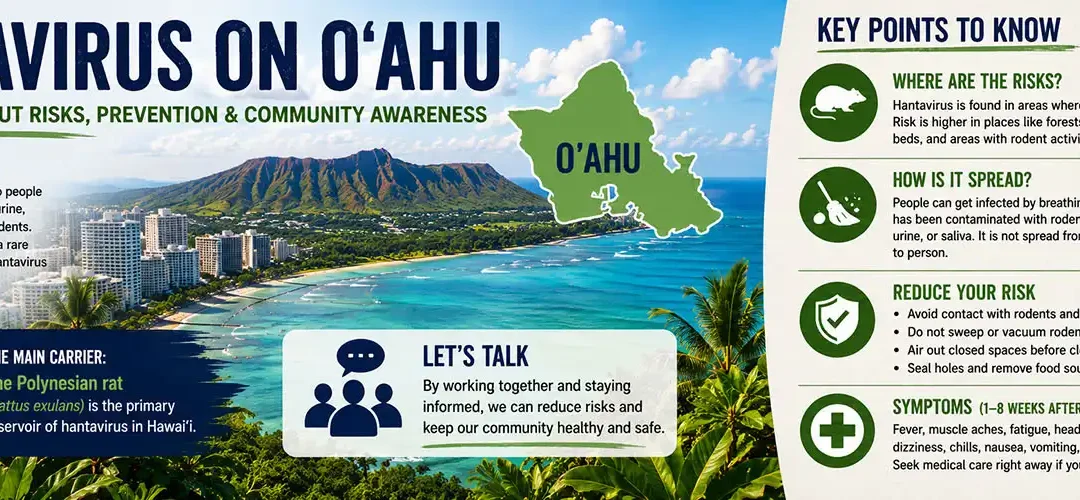
When people hear about hantavirus, especially after highly publicized cases in the mainland United States, it’s natural to wonder whether the disease is a threat in Hawaii. Rodents are common throughout Oahu, and many residents encounter rat or mouse droppings in garages, sheds, attics, storage areas, and vacant properties. Fortunately, while hantavirus is a serious illness, the actual risk of contracting it on Oahu remains extremely low.
Has Hantavirus Ever Been Reported on Oahu?
To date, there have been no confirmed locally acquired cases of Hantavirus Pulmonary Syndrome (HPS) reported in Hawaii. In fact, Hawaii is one of the few states that has not recorded a confirmed hantavirus case since national surveillance began in 1993. According to CDC data, hundreds of cases have been reported across the continental United States, primarily in western states such as New Mexico, Colorado, Arizona, and California, but none have been attributed to local exposure in Hawaii.
While Hawaii’s Department of Health monitors global and national hantavirus outbreaks, health officials continue to classify the risk to Hawaii residents as very low.
What Rodents Carry Hantavirus?
Throughout North America, hantaviruses are primarily carried by specific species of wild rodents. The most common carrier in the United States is the deer mouse (Peromyscus maniculatus), which carries the Sin Nombre virus, the strain responsible for most Hantavirus Pulmonary Syndrome cases. Other rodents that can carry hantaviruses include cotton rats, rice rats, and white-footed mice.
Importantly, deer mice are not established residents of Oahu. Hawaii’s rodent population is dominated by:
- Roof rats (black rats)
- Norway rats
- Polynesian rats
- House mice
Although rodents worldwide can carry various diseases, the specific rodent species responsible for most hantavirus infections in North America are generally not the rodents most commonly encountered on Oahu. This significantly reduces the likelihood of local transmission.
How Do People Contract Hantavirus?
People become infected when they inhale microscopic particles contaminated with infected rodent urine, droppings, saliva, or nesting materials. The greatest risk occurs when dried rodent waste is disturbed during cleaning activities such as:
- Sweeping rodent droppings
- Vacuuming contaminated areas
- Cleaning rodent nests
- Demolishing or renovating infested structures
- Entering enclosed spaces with heavy rodent activity
Once disturbed, contaminated particles can become airborne and be inhaled. Direct contact with rodent waste or rodent bites can also transmit the virus, although these routes are less common.
What Are the Symptoms of Hantavirus?
Early symptoms often resemble the flu and may include:
- Fever
- Fatigue
- Muscle aches
- Headache
- Chills
- Nausea
As the illness progresses, some patients develop severe respiratory symptoms, including shortness of breath and fluid accumulation in the lungs. Hantavirus Pulmonary Syndrome can become life-threatening and requires immediate medical attention.
What Is the Actual Risk on Oahu?
For the average Oahu resident, the risk of contracting hantavirus is extremely low.
Several factors contribute to this low risk:
- Hawaii has not recorded locally acquired hantavirus cases.
- The primary North American carrier, the deer mouse, is not commonly found on Oahu.
- Most rodent infestations in Hawaii involve rat species not known to be major carriers of the Sin Nombre virus.
- Hantavirus remains a rare disease even in states where infected deer mice are present. Since 1993, fewer than 900 confirmed cases have been reported nationwide.
That said, rodent infestations should never be ignored. Rodents can contaminate homes and businesses with urine, droppings, bacteria, parasites, and other disease-causing organisms. While hantavirus may be rare in Hawaii, rodent contamination still presents legitimate health concerns.
Safe Cleanup of Rodent Droppings
If you discover a significant accumulation of rodent droppings, avoid sweeping or vacuuming the area. These actions can aerosolize contaminated particles.
Instead:
- Ventilate the area before entering.
- Wear appropriate personal protective equipment (PPE).
- Thoroughly wet droppings and nesting materials with disinfectant.
- Carefully remove contaminated materials.
- Properly disinfect all affected surfaces.
For large infestations, professional remediation is often the safest option.
Professional Rodent Droppings Cleanup on Oahu
At Bio-X Hawaii, we provide professional rodent droppings cleanup, disinfection, and decontamination services throughout Oahu. Whether you’re dealing with a contaminated attic, garage, storage room, crawl space, commercial property, or vacant home, our team can safely remove rodent waste and restore the area to a clean, sanitary condition.
While the risk of hantavirus on Oahu remains very low, proper cleanup procedures help protect against numerous rodent-related health hazards and ensure your property is safe for occupants.
If you have discovered rodent droppings or nesting materials on your property, contact Bio-X Hawaii for a professional assessment and cleanup plan.
